

Surgeonfish (Acanthuridae) live primarily of different types of algae, making it a popular choice for coral aquariums, as they help to keep the aquarium algae free.
معظم أسماك الجراح تمتلك "مشرطًا" حادًا بالقرب من الزعنفة الذيلية، وتستخدمه للدفاع عن نفسها. يمكن أن يتسبب هذا المشرط في جروح عميقة، لذا يُنصح بالحذر عند التعامل مع هذه الأسماك أو إذا بدأت في الشجار فيما بينها.
داخل الحوض، تقضي هذه الأسماك أغلب وقتها في السباحة والتهام الطحالب من على الصخور. نادرًا ما تزعج أسماك الجراح الشعاب المرجانية أو اللافقاريات، لكن هناك استثناءات محتملة مثل سمكة "الباليت تانج" أو "البلوتانج" الكبيرة.
عادةً لا تكون أسماك الجراح عدوانية تجاه أنواع الأسماك الأخرى. لكن عند إضافة أكثر من سمكة جراح إلى نفس الحوض، فإنها تُكوّن تسلسلًا هرميًا فيما بينها. لذلك يُفضل إضافة الأنواع الأكثر عدوانية في النهاية، مع توفير عدد كافٍ من أماكن الاختباء، لأنها تفضل أن يكون لها مكان خاص للنوم.
If multiple aggressive species are added to the same aquarium, one runs the risk of one of them dying due to stress. One must therefore be cautious about adding multiple Acanthurus species or Zebrasoma xanthurum into the same aquarium. A combination of the different genera will normally get along well, although the more aggressive species can still be challenging.
Acanthurus
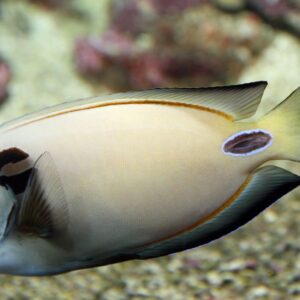
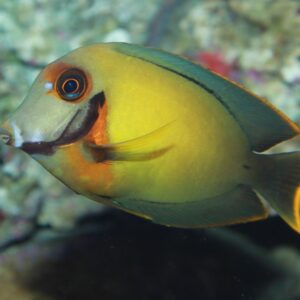
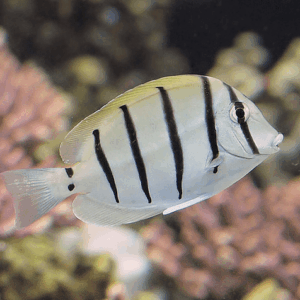
Some species in the Acanthurus genus mimic various Angelfish as juvenile, since predatory fish know that small Angelfish are hard to catch. They are therefore difficult to identify from a picture of adult fish.
Acanthurus species often place higher demands on: tank size, surroundings and water quality, than fish in the genus Zebrasoma.
-
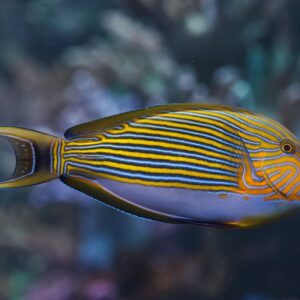
 Clown Tang (Acanthurus lineatus)
 -
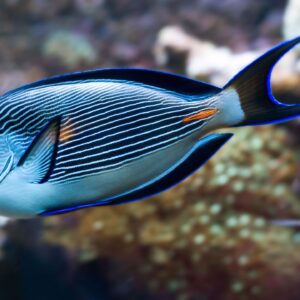
Sohal Tang (Acanthurus sohal)
-
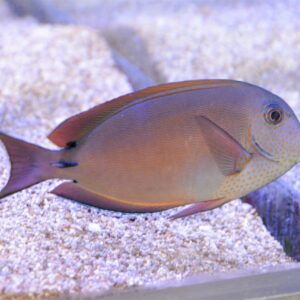
Lavender Tang (Acanthurus nigrofuscus)
-
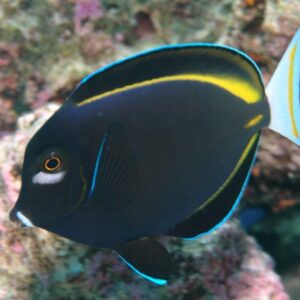
Whitecheek Tang (Acanthurus nigricans)
-
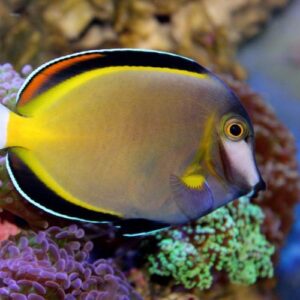
Powder Brown Tang (Acanthurus japonicus)
-
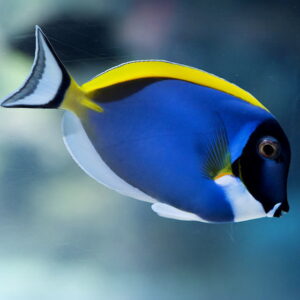
Powder Blue Tang (Acanthurus leucosternon)
-
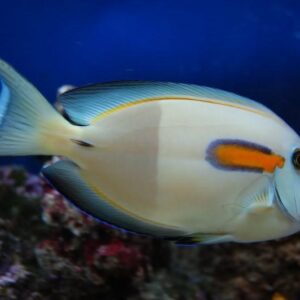
Orangeshoulder Tang (Acanthurus olivaceus)
-
Fowleri Tang (Acanthurus fowleri)
-
Leutenant surgeonfish (Acanthurus tennentii)
-
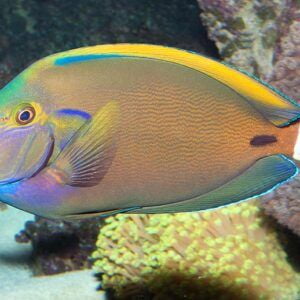
Chocolate Surgeonfish (Acanthurus pyroferus)
-
Convict Tang (Acanthurus triostegus)
Ctenochaetus (Bristletooth tangs)
The genus Bristletooth Tang (Ctenochaetus) contains a range of species, which are characterized by special teeth.
Like other Surgeonfish the Bristletooth Tang eats algae but with their specialized teeth they also scrape other organic material from rocks and stones. Ample sand and rocks are therefore imperative.
Overall the Ctenochaetus are peaceful and not quite as active, as many of the other surgeonfish. It is therefore suited to smaller aquaria.
Because of these their mild behaviour they are not a good combination with some of the more aggressive Surgeonfish.
Ctenochaetus are not so colourful as many other Surgeonfish. Some species are more vibrant in colour but this changes when they get to around 3 inch (7-8 cm).
Naso (Unicornfishes)
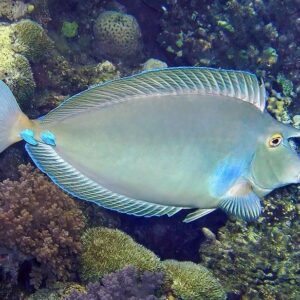
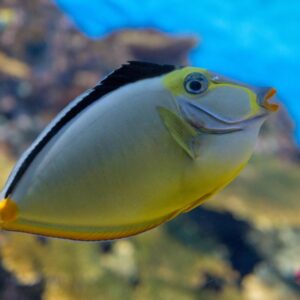
To thrive, species in the Naso genus, normally demand large aquaria, both because of their size, but also to fulfil their need for swimming space.
Like other Surgeonfish, Naso, or Unicornfish, eats a great amount of algae, which should reflect in their food. They need more algae based food then other species of Surgeonfish, this one must be aware of so as not to create nutrition problems.
When newly introduced Naso can be in the aquarium without eating for some time, but they normally begin to eat within a week.
They are, on the whole a peaceful species in relation to other Surgeonfish.
It is important that one chooses a healthy individual at the petshop, i.o.w. a fish that is active, shows normal behaviour and does not look too thin. If it looks poorly one has a challenge on ones hand, especially when the fish takes its time to start eating.
Some sources report, that large Naso Surgeonfish can in some cases scratch acrylic and glass, since their scalpel grows larger then others of the species.

Paracanthurus (Palette)
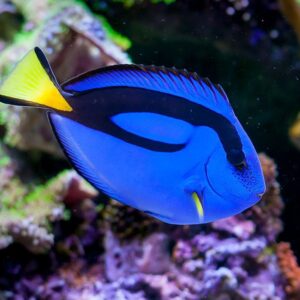
This genus only has one species, but it is unique in relation to other Surgeonfish.
They are generally peaceful and ignored by many other species of Surgeonfish, since they do not resemble them. They are however delicate, especially during transportation. They should be placed in a peaceful environment with plenty to eat during acclimatization.
This surgeonfish has a charming way of swimming and can act almost playful when it is observed.
Because of this behaviour it is absolutely not, suited to small aquaria. It matures quickly and even though it seems that immature ones fit in the tank, it is not recommended.
Zebrasoma (Sailfins)
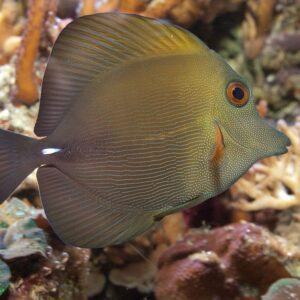
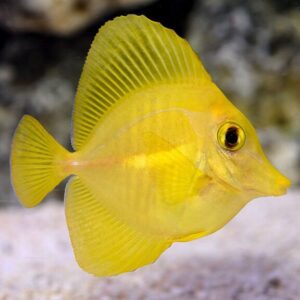
One almost always sees this genus of Surgeonfish in a coral aquarium, since they are beautifully coloured, relatively easy to keep and useful.
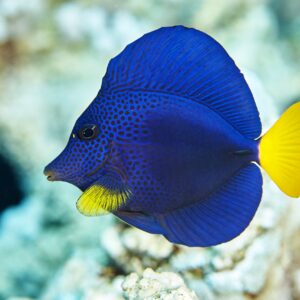
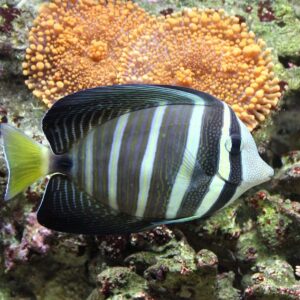
The Zebrasoma genus is distinguished in that all the species have a larger or smaller, sail-like fin, which is folded out when threatened by other fish.
Z. xanthurum are the only fish in this genus which are decidedly aggresive, the others typically do not present problems, when the aquarium has space enough.
Some specimens of Z. flavescens can act aggressively towards other Zebrasoma tangs.

 English
  العربية