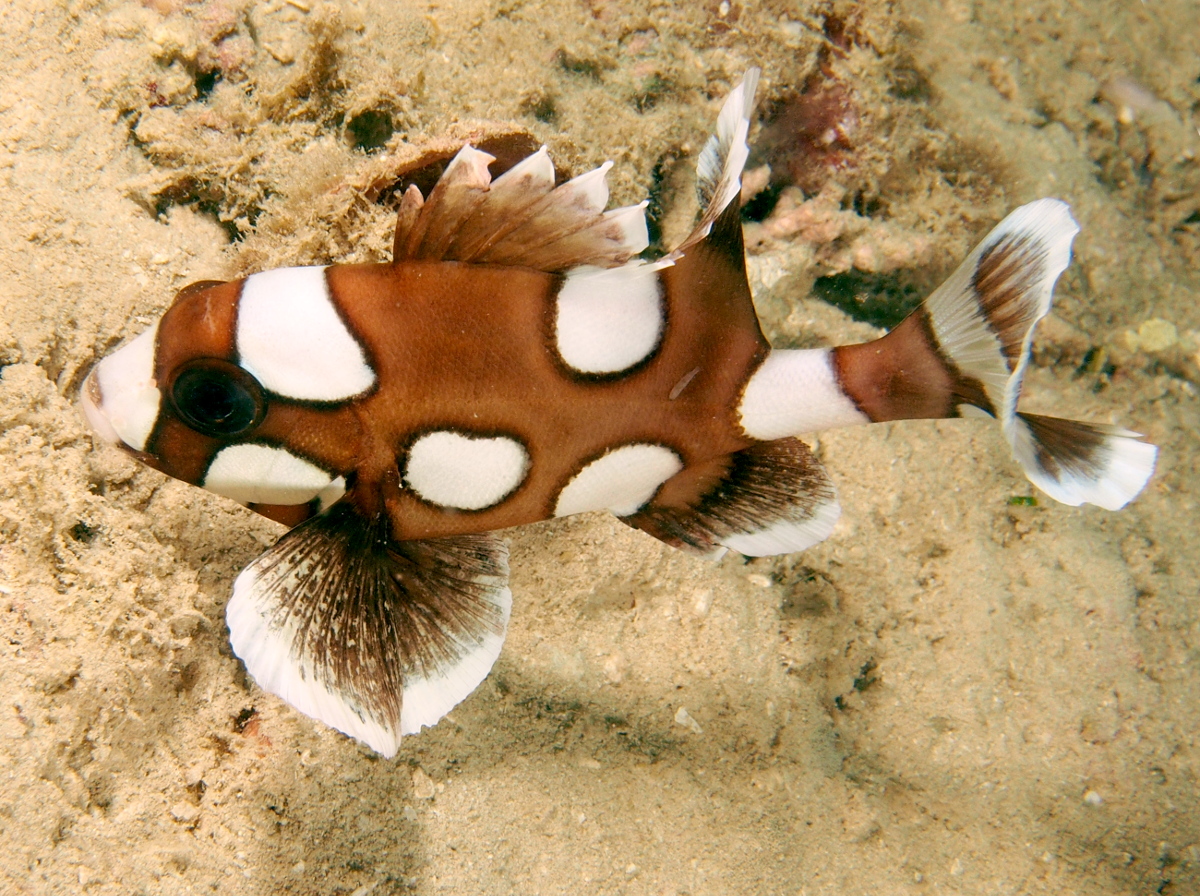
Clown Sweetlips (Plectorhinchus chaetodonoides)
1700,00 EGP – 2000,00 EGPنطاق السعر: من 1700,00 EGP خلال 2000,00 EGP
| Variation | Status | Price |
|---|---|---|
| Small | Out of Stock | 1700,00 EGP |
| Medium | Out of Stock | 1800,00 EGP |
| Large | Out of Stock | 2000,00 EGP |
SKU
5576
فئات Fishs, Grunts & Sweetlips, Live Stock
Tags Haemulidae, Plectorhinchus, Reef safe with caution
Fish Description
Facts
| Latin Name | Plectorhinchus chaetodonoides - Lacepède, 1801 |
| Local Name | Clown sweetlips |
| Family | Haemulidae - Plectorhinchus |
| Origin | East Indian Ocean, West Indian Ocean, Australia, Indonesia, Central/West Pacific |
| Max length | 72 cm (28.3") |
As Aquarium Fish
| Minimum volume | 2000 l (528 gal) ? "Minimum volume" indicates the size of the tank needed to house this species under optimal conditions.This is based on a medium size animal, which you want to keep for several years.It might be possible to keep smaller specimens for a limited period in a smaller tank.A larger tank might be needed for fully-grown specimens. |
| Hardiness | Delicate ? "Hardiness" indicates how resistant this species is to disease and how well i tolerates bad conditions in general.Some species doesn't handle transportation very well, but that doesn't mean that the species isn't hardy under the right conditions. |
| Suitable for Aquarium | Experience, preparation and extra care required ? In this case, a "normal" aquarium is a reef aquarium with mixed corals or a fish only aquarium with an approximately salinity of 1.026 (sg) and a temperature close to 26°C.Species requiring more than a 4000-liter tank are considered not suitable for home aquarium.Special aquariums may cover tanks with low salinity, sub-tropical temperature, deep sand bed, sea grass etc. |
| Reef safe | Reef safe with caution ? Always reef safe: No sources indicate that this species will harm corals or other invertebrates.Often reef safe: Only a few aquarists has reported problems keeping this species with corals and other invertebrates.Reef safe with caution: This species may be a threat to some types of invertebrates.Reef safe with luck: Most specimens will harm corals and/or other invertebrates, but you might be lucky.Not reef safe: This species is a threat to most corals and/or other invertebrates. |
| Aggressiveness | Docile |
Feed
| Recommended | Fish |
Description
Beware of
| Grows fast |
|---|
|
This species grows very quickly if fed well. |
| Difficult to provide the correct nutrition |
|---|
|
Hard to give this species the correct nutrition and is therefore hard to keep alive. |
| Poses a threat towards small fish and invertebrates |
|---|
|
This species can be a threat towards small fish, shrimps, small bivalves, worms, snails and the like. |
| Searches through sand for food |
|---|
|
This species searches through the sand for food, which can make the water cloudy and shakes up detritus.
In an aquarium their natural food source in the sand is quickly exhausted. |
| Demand a very large aquarium when fully grown |
|---|
|
This species needs a very large aquarium when fully grown. Exactly how big the aquarium should be is hard to say, but the size of this species is such, that it cannot normally be kept in a home aquarium. |
Keep in mind
| Requires a varied diet |
|---|
|
This species must be fed with an appropriately varied diet. |
| Heavy load |
|---|
|
This species eats a great deal and demands an aquarium that can tolerate such a heavy load. |
| Live food |
|---|
|
There is a greater chance of success with this species if one can supply a living feed to allow it to adapt to the tank. |
| Frequent feeding |
|---|
|
This fish requires feeding several times a day, especially when newly added.
When the fish can find its natural food in the aquarium it requires less frequent feeding. |
| Hiding places |
|---|
|
This species needs good hiding places, for example, between live rocks. |
| Requires plenty of space for swimming. |
|---|
|
This species revels in swimming and requires an aquarium with ample space. |
| Docile |
|---|
|
This species is very shy and docile, so one should be careful when keeping it with more aggressive fish. |
Related
Additional information
| Size | Small, Medium, Large |
|---|
Only logged in customers who have purchased this product may leave a review.
Related products
-

Dusky angelfish (Centropyge multispinis)
750,00 EGP Select options This product has multiple variants. The options may be chosen on the product page -
Blue Tang (Paracanthurus hepatus)
3000,00 EGP – 4000,00 EGPنطاق السعر: من 3000,00 EGP خلال 4000,00 EGP Select options This product has multiple variants. The options may be chosen on the product page -
Leutenant surgeonfish (Acanthurus tennentii)
1800,00 EGP – 3000,00 EGPنطاق السعر: من 1800,00 EGP خلال 3000,00 EGP Select options This product has multiple variants. The options may be chosen on the product page -
Chocolate Surgeonfish (Acanthurus pyroferus)
2200,00 EGP – 3000,00 EGPنطاق السعر: من 2200,00 EGP خلال 3000,00 EGP Select options This product has multiple variants. The options may be chosen on the product page
 English
  العربية
Reviews
There are no reviews yet.